Diese Webseite ist Teil des Projektes „Neugestaltung der touristischen Wegweisung der Stadt Mühlhausen/Thüringen“, das im Rahmen der Gemeinschaftsaufgabe „Verbesserung der regionalen Wirtschaftsstruktur“ (GRW) von der Bundesrepublik Deutschland und dem Freistaat Thüringen gefördert wird.
State ornithological station in Seebach
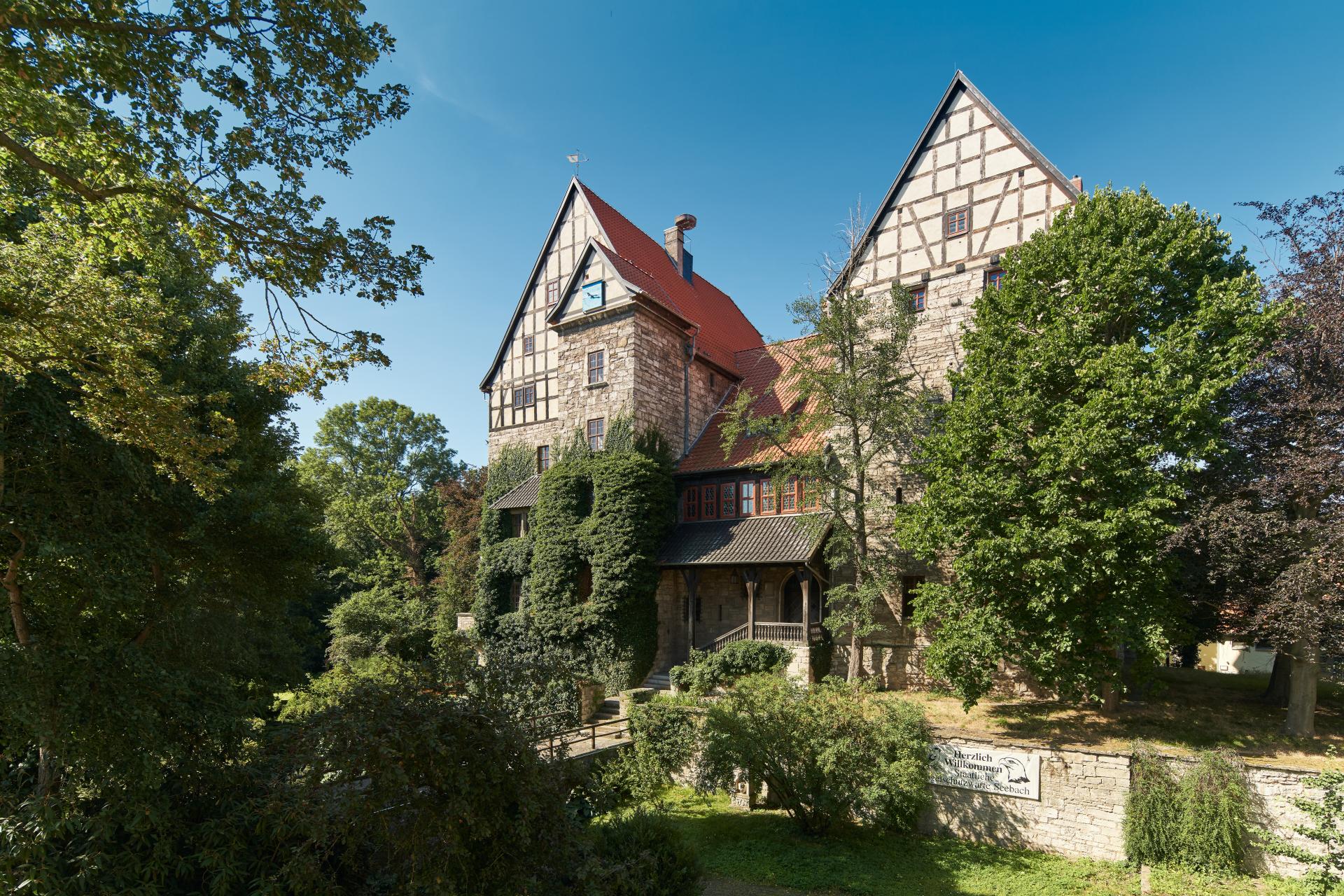
Since the 12th century, a ministerial family named after Seebach has been known to exist in the vicinity of the Landgraves of Thuringia. The original village with an older fortification was located about two kilometres northeast and was called “Niederseebach” in the late Middle Ages before it fell into ruin in the 16th century. In the middle of the 13th century, Albert von Seebach, a younger brother of this generation, founded a new castle – today's bird sanctuary. In its vicinity, a second district quickly developed, initially referred to as “Oberseebach”, which has borne the name “Seebach” since the disappearance of the older settlement.
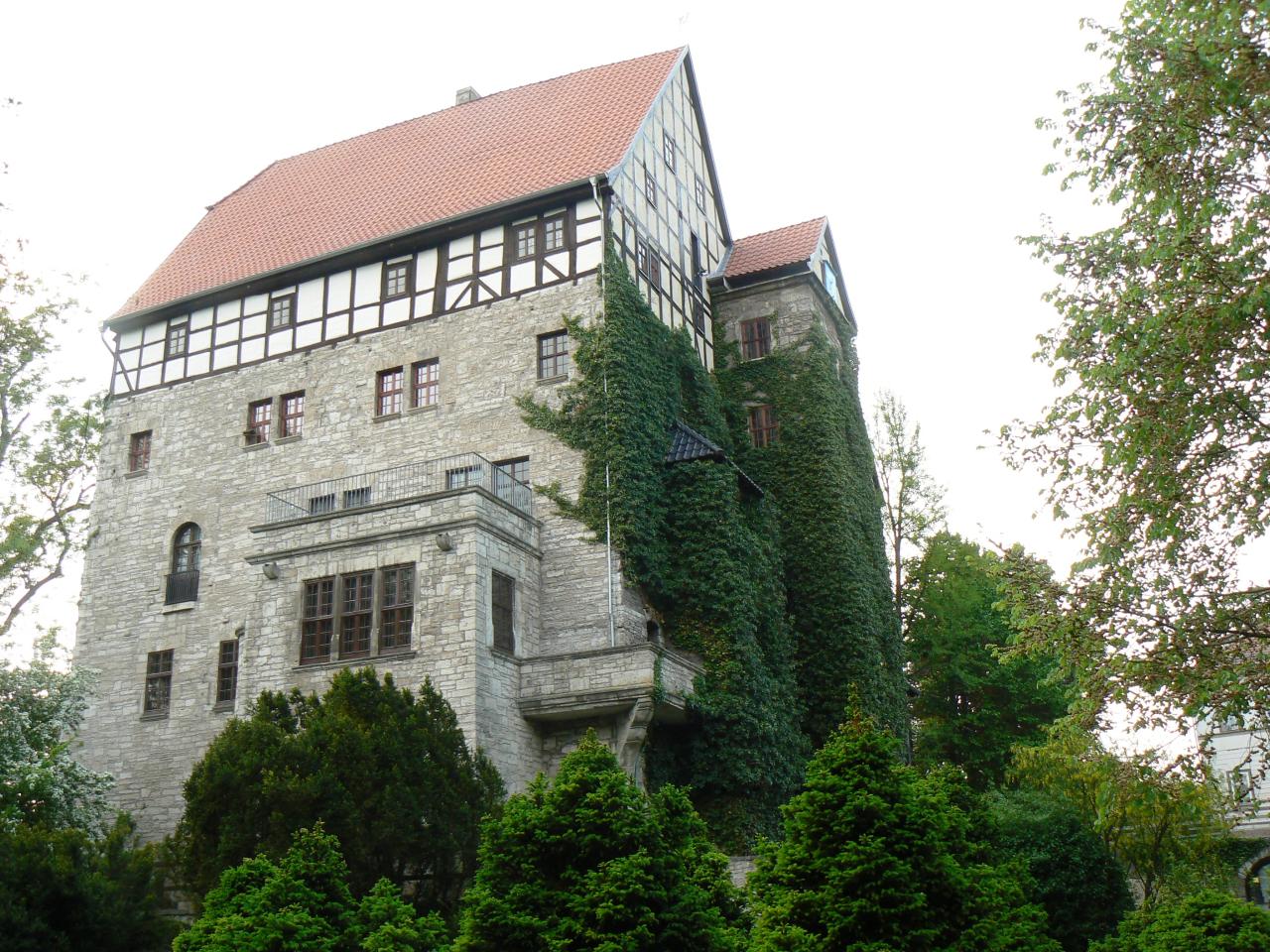
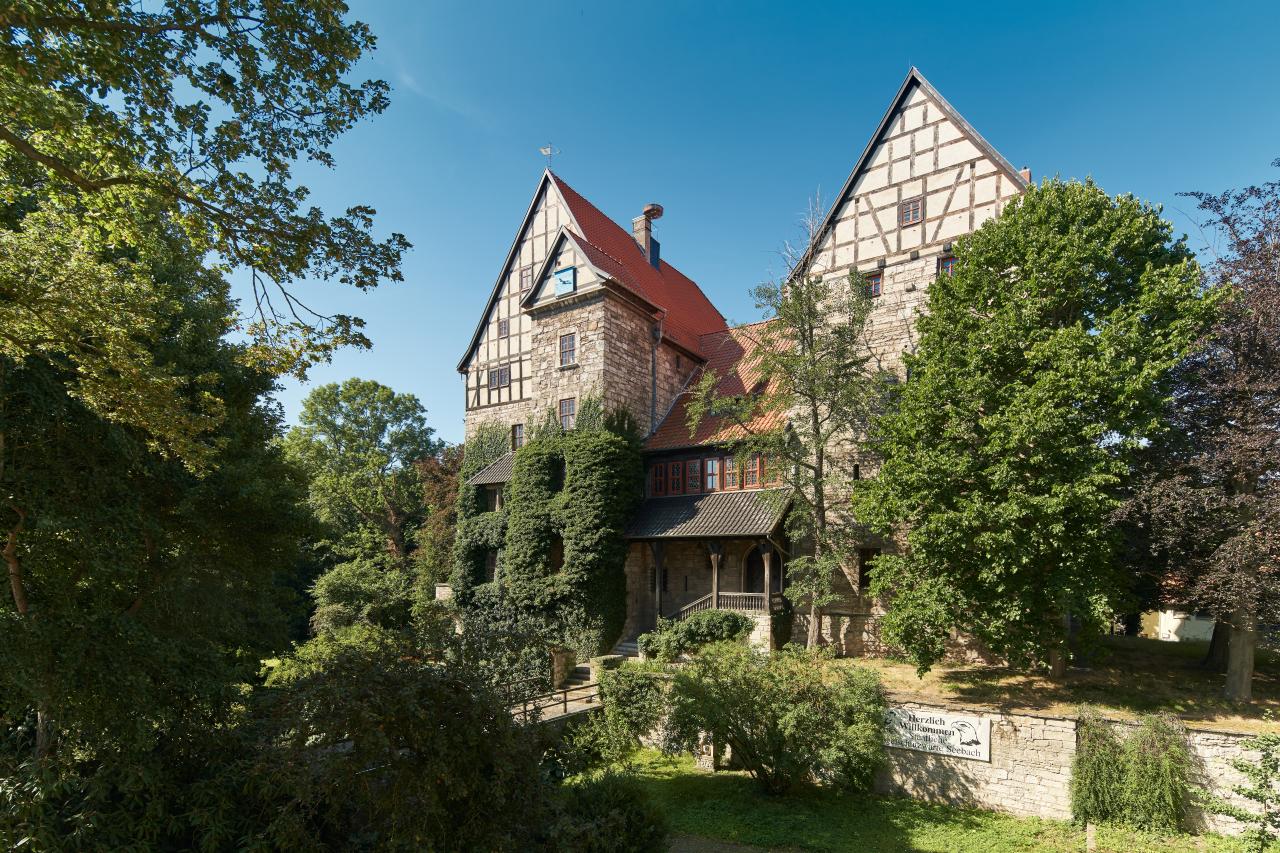
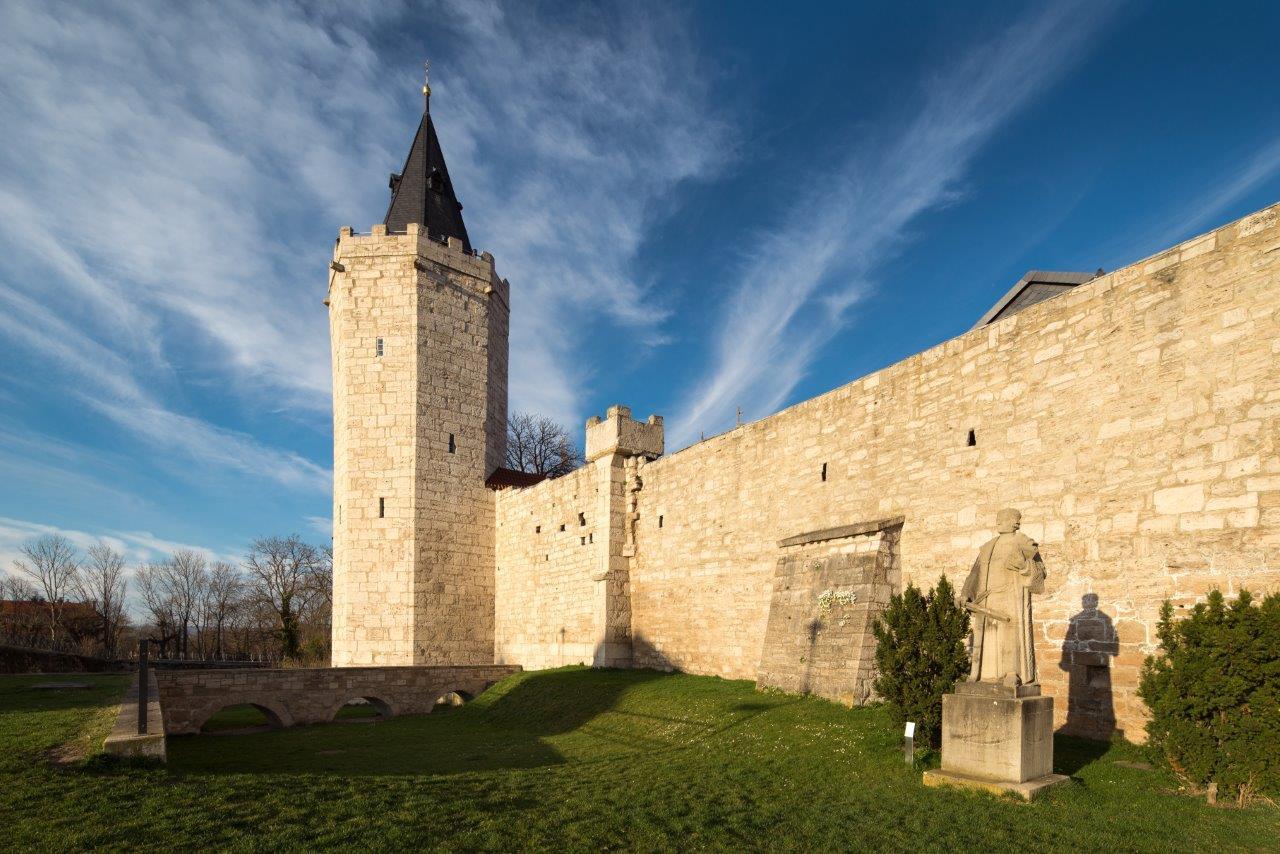
Significant parts of the medieval castle have been preserved with the two rectangular buildings built parallel to each other. The space between them was originally occupied by a courtyard. It was not until 1911 that an annex connected the medieval houses. The Niederungsburg was surrounded by a moat and a Zwinger wall. In the northeast, there was an additionally secured outer bailey area, which housed farm buildings and stables. This area has recently been completely built over.
In 1523, Hans Sittich von Berlepsch (around 1480–1533) acquired the Seebach lordship with the castle. As bailiff of Eisenach and castle reeve of the Wartburg Castle, he had previously been Martin Luther's custodian and host during his stay in 1521/22. During the Peasants' War, Seebach was plundered on 30 April 1525 and the castle was severely damaged. Hans Sittich von Berlepsch was taken prisoner by the rebellious citizens of Mühlhausen. After the liberation, he received his property back and was partially compensated for the damage he had suffered, but he lost the sovereign offices in Eisenach and at Wartburg Castle. From 1527 he rebuilt his seat in Seebach. For four centuries, the village and the castle remained in the possession of his descendants.
In the second half of the 19th century, Hans Freiherr von Berlepsch (1857–1933) lived in Seebach Castle. He had an officer‘s career until his dismissal as a lieutenant colonel at the end of the First World War in 1918. The enthusiastic ornithologist is considered one of the founders of scientific and practical bird conservation. His work “The Entire Protection of Birds. His Reasoning and Execution” (Der gesamte Vogelschutz. Seine Begründung und Ausführung) from 1899 was translated into six languages and went through twelve editions until 1929. In 1923, the Faculty of Philosophy at the University of Halle-Wittenberg awarded him an honorary doctorate. His simple grave in the village cemetery with a bird bath embedded in the ground remembers him as “Dr. h.c. Hans Frhr. v. Berlepsch. Altmeister des deutschen Vogelschutzes. 1857–1933.” In Seebach, the “bird baron” is considered an eminent personality in local history, along with the Prussian Minister of State and social reformer Hans Hermann von Berlepsch (1843–1926) from another line of the family.
Berlepsch used his ornithological knowledge, which he had acquired through observations in his home country and on study trips, specifically for bird conservation. He designed the first nesting boxes, including the mass-produced “von Berlepsche nesting box,” winter-proof birdhouses and the feeding bell. In 1884/85 he designed a bird sanctuary in the vicinity of Seebach Castle with about 100 artificial nesting opportunities. He made a significant contribution to the enactment of the “Bird Protection Law for the German Reich” in 1908. He dedicated his own property entirely to ornithology, which in the same year was named a “state-approved experimental and model station for bird protection” by the Royal Prussian State Government. From 1911 to 1914, the castle was extensively rebuilt to protect birds and served as an experimental station with a scientific director and several assistants.
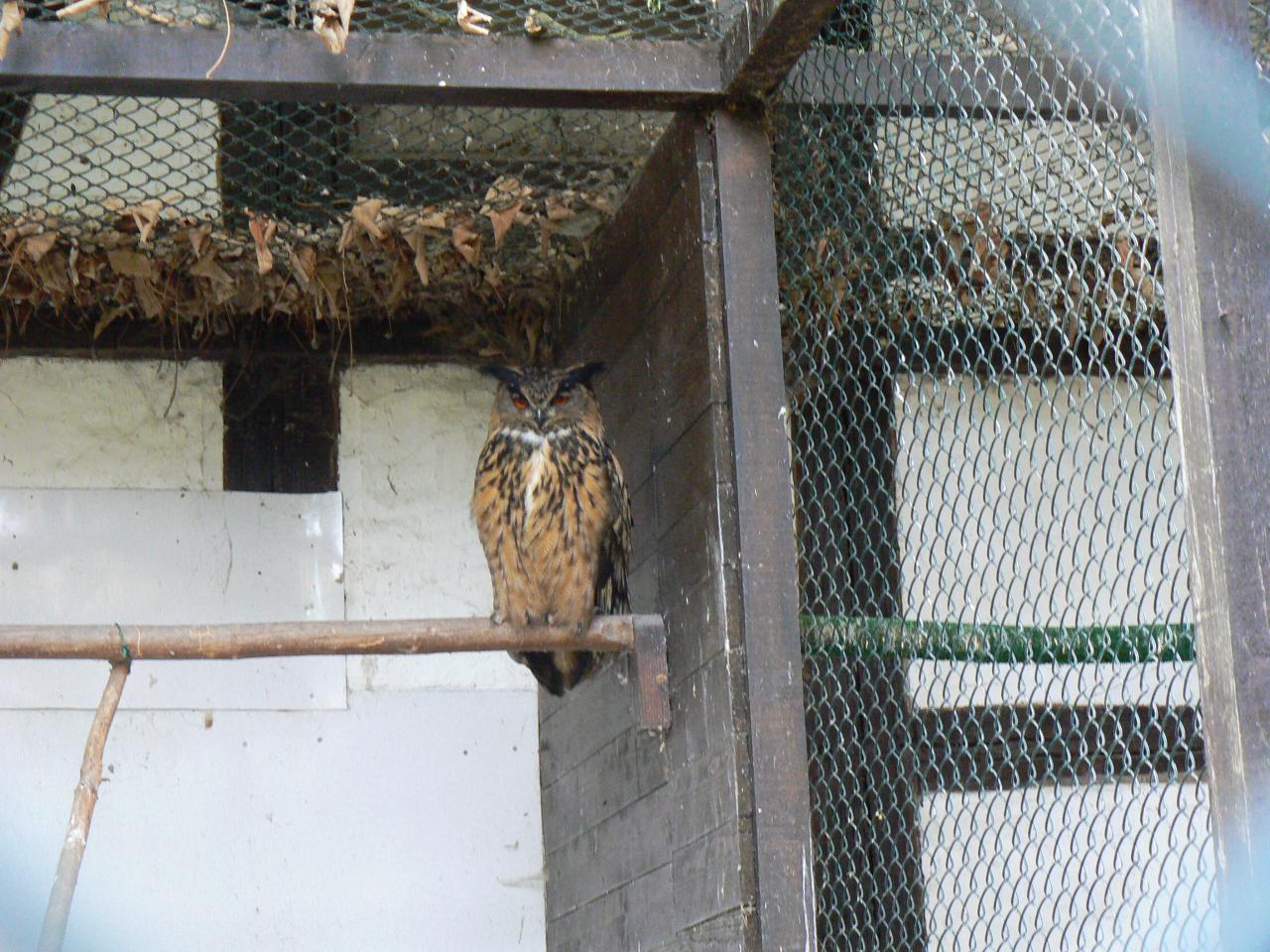
Thus, Hans Hermann von Berlepsch laid the foundation for the oldest bird sanctuary in Germany. Today, the “Seebach Bird Protection Station” is part of the specialist authority in the “Thuringian State Office for the Environment, Mining and Nature Conservation” (TLUBN). Its tasks include scientific work, providing expert advice to authorities, associations and private individuals on issues of ornithology and bird protection, environmental education and public relations work, as well as the operation of a rescue and rehabilitation station.


Address
State ornithological station in SeebachLindenhof 3
99998 Mühlhausen OT Seebach
Phone: +49 3601 7891018
E-Mail: verein@vogelschutzwarte.de
Web: https://www.vogelschutzwarte.de
publicly accessible
Pets allowed
free entrance
Smoking not allowed
Photography allowed
toilets
Information for visitors
further information
Languages:
German
Distance to public transport:
230 Meter
Guided tours
guided tour (only) with registration
Payment possibilities
Cash payment



Strg gedrückt halten und Mausrad benutzen, um zu zoomen
This might be interesting for you
Legal information
Name of company
Association of the Friends of the Ornithological Station, H.-M. Menge
Lindenhof 3
99998 Mühlhausen/Thüringen OT Seebach
Phone: +49 3601 7891018
E-Mail: verein@vogelschutzwarte.de
Disclaimer
The content of our pages has been created with the utmost care. The site also contains links to external websites of third parties on whose content we have no influence. We cannot assume any liability for the correctness, completeness and up-to-dateness of the contents and links. Click here for further information.
Diese Webseite ist Teil des Projektes „Neugestaltung der touristischen Wegweisung der Stadt Mühlhausen/Thüringen“, das im Rahmen der Gemeinschaftsaufgabe „Verbesserung der regionalen Wirtschaftsstruktur“ (GRW) von der Bundesrepublik Deutschland und dem Freistaat Thüringen gefördert wird.